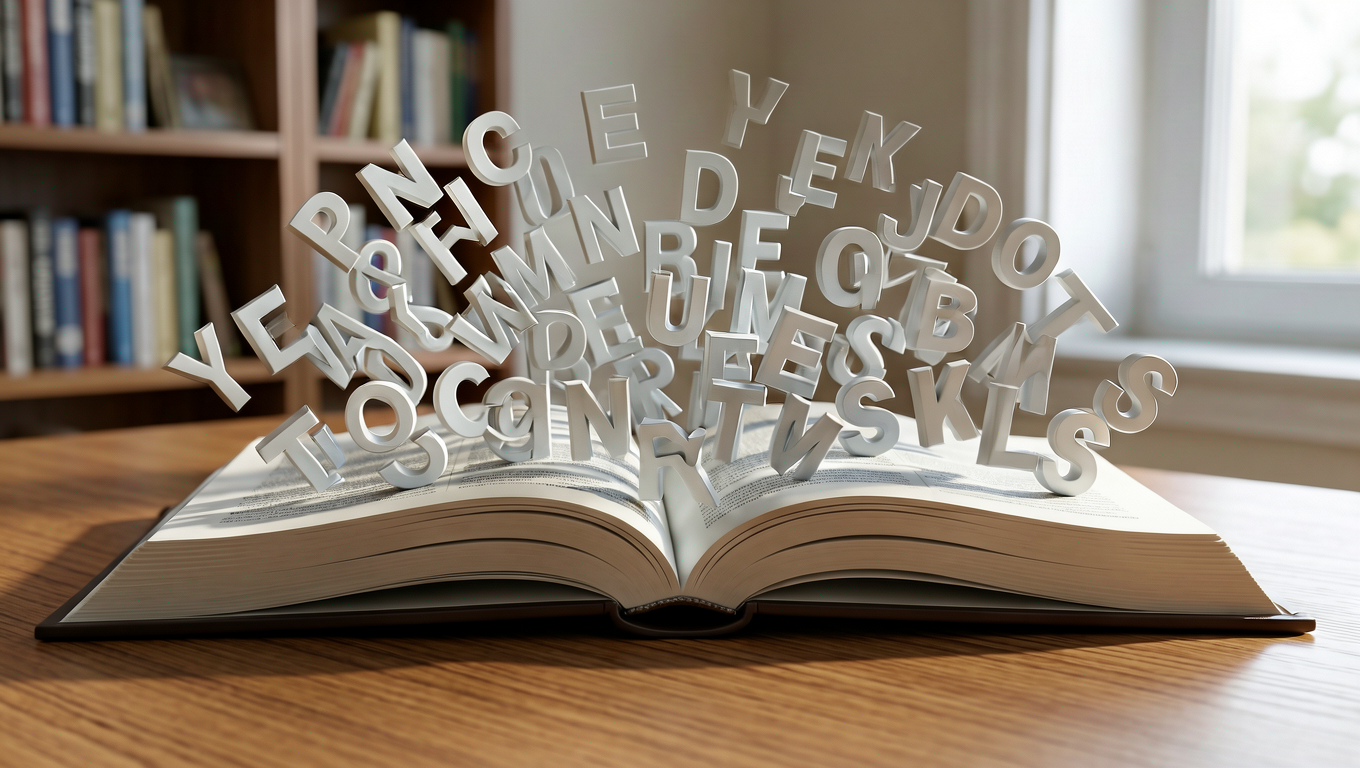
In the publishing world, there is a truth that readers never articulate but feel on every page: typography is the author's invisible voice. Even before reading your first word, the reader's eye judges the credibility of your work through its typeface. For the Strategic Author, choosing a font is not a matter of aesthetics; it is a tactical decision.
The Golden Rule: Serif or Sans-Serif?
This is the first choice you will have to make when finalizing your manuscript in Word.
Serif fonts (with serifs, like Garamond or Times New Roman) are the absolute standard for body text. The small strokes at the ends of the letters create an imaginary line that guides the eye, reducing visual fatigue during long reading sessions.
Sans-Serif fonts (without serifs, like Arial or Helvetica) are ideal for titles, highlighted quotes, or very modern technical guides. They provide clarity but can become tiring over 300 pages of dense text.
Choosing Based on Your Literary Genre:
Your font must whisper to the reader that they are in the right place:
Classic Fiction and Romance: Garamond or Sabon. They evoke elegance, tradition, and fluidity.
Thriller and Mystery: Baskerville or Caslon. They possess a sharper, almost cold authority that suits suspense.
Practical Guides and Business: Lato or Montserrat (for titles) paired with a highly readable Serif font for the text. This projects an image of efficiency and modernity.
Fables and Tales (Ruby the Bee style): A font with a bit more character, like Palatino, which offers a generous and warm foundation.
Technical Readability on Amazon KDP:
Publishing on Amazon imposes physical constraints. A font that looks beautiful on screen can become illegible once printed on cream or white paper.
The Ideal Size: For a 6x9 inch format, aim for a size between 11pt and 12pt. Below that, you exclude older readers. Above that, your book will look like a children's book.
Line Spacing: Do not crowd your lines. A line spacing of 1.15 or 1.25 allows the text to "breathe" and avoids the compact block effect that discourages the reader.
The Strategic Author Workflow:
As we explain in our methodology, technology handles 90% of the technical work by delivering a KDP-Ready file. But the remaining 10%—the "artisan's touch"—happens in Word.
"Changing the font can alter the total pagination of your book. This is why this step must be the very last one, just before the final update of your table of contents."
Once you have chosen your ideal font in your Word file exported from Aizybook, check that your chapter headings always start on a right-hand page (odd page). It is this attention to typographical detail that will make your reader say, "This is a real book."
Conclusion :
Do not let a default typeface (like Calibri) ruin months of creative work. Take the time to choose a typography that carries your message with elegance. On Aizybook, we give you the perfect structure; it is up to you to add the seal of your visual authority.
The Aizybook Team